

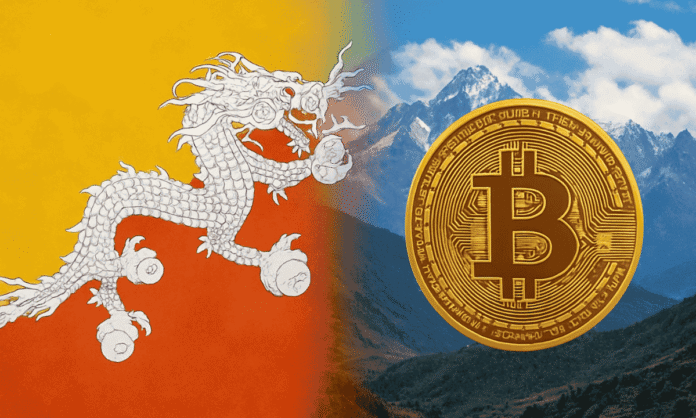
- Bhutan’s Bitcoin holdings may equal up to 40 percent of its GDP.
- The figure is based on estimated values, not official government confirmation.
- The move is bold but carries both risks and major opportunities.
In recent months, headlines have suggested that the small Himalayan kingdom of Bhutan may now hold Bitcoin reserves so large that they equal nearly 40 percent of the country’s gross domestic product (GDP). For a nation better known for its focus on happiness and environmental preservation, the claim is both surprising and fascinating. But how true is it? And what does it mean for Bhutan’s economy?
The Rise of Bitcoin in Bhutan
Bhutan is a landlocked country with a population of under 800,000. For decades, its economy has relied on hydropower exports, tourism, and agriculture. Unlike most nations, Bhutan has always been cautious about opening itself to global markets. Its economic policies often emphasize sustainability and stability rather than fast-paced growth.
That is why reports of massive Bitcoin holdings came as such a shock. Blockchain analysis firms began tracking wallets that appeared to be linked to Bhutan’s sovereign wealth fund and state-backed investment groups. These wallets, according to analysts, contained hundreds of millions of dollars worth of Bitcoin.
By late 2024, some reports estimated that Bhutan was holding around 750 million dollars in Bitcoin. At that time, this was equal to nearly 28 percent of the country’s GDP. As Bitcoin prices rose in 2025, the estimated value of those reserves increased as well. More recent figures suggest that the holdings could now be worth as much as 1.3 billion dollars, bringing the total close to 40 percent of Bhutan’s GDP.
Understanding the Numbers
It is important to clarify what these numbers really mean. GDP measures the total value of goods and services a country produces in a year. When people say Bitcoin makes up 40 percent of Bhutan’s GDP, they do not mean that Bitcoin itself is driving nearly half of Bhutan’s yearly economic activity. Instead, analysts are comparing the value of Bhutan’s Bitcoin holdings to the size of its economy.
For example, if Bhutan’s GDP is around 2.7 to 3 billion dollars, and its Bitcoin reserves are estimated at 1.3 billion, then the holdings are equal to roughly 40 percent of that figure. This is a comparison of value, not a direct contribution to GDP.
Why Is Bhutan Buying Bitcoin?
Bhutan’s decision to invest in Bitcoin is unusual for a government. While many countries are still debating regulations for cryptocurrencies, Bhutan quietly began accumulating digital assets years ago. Reports suggest that its sovereign investment arm, Druk Holding and Investments, may have been behind the purchases.
There are several possible reasons why Bhutan turned to Bitcoin. First, Bitcoin offers a potential hedge against inflation and global financial uncertainty. Second, Bhutan may see it as a way to diversify its economy beyond hydropower and tourism, both of which are vulnerable to external shocks. Third, the country has access to cheap hydropower, which makes Bitcoin mining a potentially profitable venture. Mining projects have already been linked to Bhutan’s strategy to expand its digital economy.
Risks and Opportunities
While Bhutan’s Bitcoin strategy looks bold, it is not without risks. Cryptocurrency prices are highly volatile, and a sharp decline could wipe out billions of dollars in value. Since Bhutan is a small nation, such a loss would have a big impact on its finances. Moreover, Bitcoin is not a liquid asset in the same way as foreign currency reserves. It can be harder to use directly for international payments.
On the other hand, if Bitcoin continues to rise in value, Bhutan could gain a financial advantage unmatched by other small economies. The profits could be used to support social programs, infrastructure, and investments in technology. In this sense, Bhutan may be positioning itself as a pioneer in sovereign crypto adoption.
What This Means for the Future
The story of Bhutan’s Bitcoin reserves highlights how digital assets are changing the global financial landscape. A country known for its cautious and balanced approach to development is now being recognized as one of the world’s largest state-level Bitcoin holders. If the estimates are accurate, Bhutan’s experiment may inspire other small nations to consider similar strategies.
Still, it is important to remember that the figure of “40 percent of GDP” is based on estimates. The government has not officially confirmed the exact size of its Bitcoin holdings. Analysts rely on blockchain data and financial disclosures to make their calculations. While the evidence is strong, it is not absolute proof.
Final Thoughts
The idea that Bitcoin now makes up nearly 40 percent of Bhutan’s GDP is striking, but it should be understood in context. It reflects the value of holdings compared to the size of the economy, not direct economic output. Whether this gamble will pay off for Bhutan depends on the future of Bitcoin itself.