

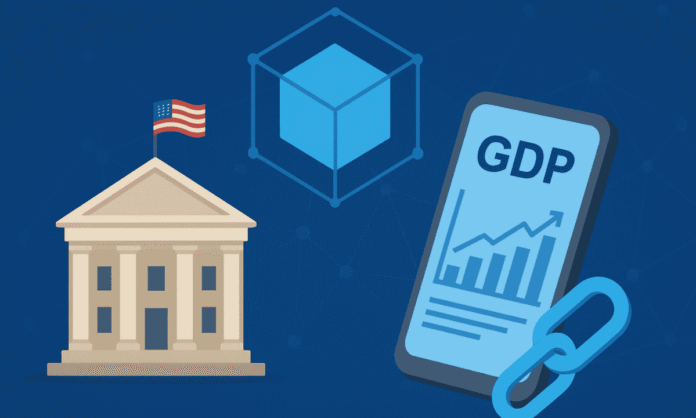
- The U.S. is moving economic data to blockchain for greater transparency.
- Blockchain locks data in place once it is published, removing doubts about
- manipulation. It’s a bold step to rebuild public trust in official statistics.
The United States government has announced a groundbreaking step in the way it shares official statistics. The Department of Commerce confirmed that it will begin publishing economic data, starting with Gross Domestic Product (GDP) figures, on blockchain technology. This move is designed to increase transparency, security, and trust in one of the most critical areas of government reporting: the economy.
For decades, economic data has been released through traditional methods like press releases and government websites. While those systems have served their purpose, they also come with challenges, from delays in data distribution to questions about accuracy and manipulation. By adopting blockchain, the government hopes to make economic reporting more reliable and resistant to tampering.
Why Blockchain for Economic Data?
At its core, blockchain is a digital ledger that records information in a secure and tamper-proof way. Once data is entered, it cannot be altered without leaving a trace. This makes it ideal for applications where trust and accuracy are crucial.
Publishing GDP figures and other economic statistics on blockchain means that once the numbers are released, they will exist in a permanent, verifiable record. Anyone—whether an economist, journalist, or everyday citizen—can access the data directly from the blockchain, confident that it has not been changed after publication.
This approach does not change how the data is collected or calculated. The same government agencies will still gather and analyze the information. What changes is how that information is shared with the public. By removing the possibility of alteration after release, blockchain adds a new layer of credibility.
A Response to Growing Concerns
The decision to use blockchain comes at a time when trust in official statistics has been under pressure. In recent years, debates over the accuracy and independence of U.S. economic data have grown louder. Some political leaders have questioned whether numbers like unemployment rates or GDP growth truly reflect reality.
By putting these figures on blockchain, the government is signaling a commitment to transparency. Even if people disagree with how the data was calculated, they can at least be sure that the published figures are genuine and unchanged. This move may also help restore confidence among businesses, investors, and international partners who rely heavily on U.S. economic data to make decisions.
What Will Change First
The rollout will begin with quarterly GDP data, one of the most watched indicators of the country’s economic health. Over time, the Department of Commerce has suggested it may expand blockchain publication to include other key statistics, such as employment figures, trade balances, and inflation reports.
The idea is to build a comprehensive system where all major economic data can be accessed directly on blockchain. While technical details are still being worked out, the long-term goal is to create an open, secure, and permanent record of the nation’s economic performance.
Benefits and Limitations
The benefits of this system are clear. Publishing data on blockchain ensures that everyone has access to the exact same figures at the same time. It reduces the risk of leaks, misreporting, or manipulation. It also allows for greater transparency in how data is shared with the public.
However, it is important to understand the limits of this approach. Blockchain can guarantee that published data has not been altered, but it cannot ensure that the data itself is accurate before it is uploaded. If there are errors in the collection or calculation of statistics, those errors will still appear in the blockchain record. In other words, blockchain strengthens trust in the publication process, not in the methodology behind the numbers.
A Step Toward the Future
The United States is not the first country to explore blockchain in government operations, but applying it to economic reporting is a significant step. It shows how digital technology can reshape the way citizens interact with official information. As more data becomes available in this format, the public may grow more accustomed to checking blockchain records instead of relying solely on government press releases or news reports.
Looking ahead, this initiative could pave the way for other applications of blockchain in government, from managing public records to ensuring the integrity of elections. For now, though, the focus is on building trust in economic statistics—numbers that influence everything from financial markets to household decisions.
Conclusion
The U.S. government’s decision to publish GDP and other economic data on blockchain marks a new chapter in transparency. While it does not solve every issue related to data collection or interpretation, it does provide a secure, tamper-proof way to share information with the public.
Transparency matters. Trust matters. And blockchain may prove to be a valuable tool in strengthening both.